Showing posts with label CreateSpace. Show all posts

Monday, March 12, 2012

Guest Post: Everything You Wanted to Know about Publishing (But Were Afraid to Ask)

BY AMY ROGERS

This article originally ran on IndieReader. 

For most of the history of the printed book, there were two ways for an author to get her work in front of readers: traditional publishing and vanity press publishing.

That kind of limited choice is so last decade.

Traditional publishing still dominates the book business. After years of acquisitions and consolidation, traditional publishing now consists of only six very large publishing houses, each of which controls numerous imprints (in-house brands): Hachette Book Group, HarperCollins, MacMillan, Penguin Group, Random House, and Simon & Schuster.

The way these publishers operate hasn’t changed much in a long time. Here’s a basic outline of how a trad pub deal typically works (for fiction):

  • Author writes a novel
  • Author finds a literary agent willing to represent the work.
  • Literary agent puts the work on submission to specific acquisitions editors at specific publishers.
  • Editor falls in love with the work and convinces other people at the publishing house that the publisher can make money selling this work.
  • Author gets paid an advance against royalties; agent keeps a percentage as a fee; publisher turns the author’s manuscript into a saleable book. This includes editing, layout, cover design, publicity, distribution, and more.
  • The book is published, first in hardcover, then in paperback one year later. Ebook publication and pricing varies.

Until recently, a novelist’s only option outside the trad pub system was to take the manuscript to a vanity publisher. The name itself suggests the contempt people in the business had for such companies. A vanity press would publish books “not good enough” for a real publisher, doing so only to satisfy the author’s “vanity.”

Unlike traditional publishing, the costs of vanity publishing are paid upfront by the author in cash; the author is the publisher’s customer. In traditional publishing, the costs are paid by the publisher and are recovered from the profits of selling books. Booksellers and readers are the publisher’s customers.

For most writers, vanity publishing was a costly indulgence. At great expense, they got to hold a paper copy of their book in their hands. But few, if any, other people heard about the book or read it.


Not vain, independent

Old-fashioned vanity publishing has been revolutionized by ebooks and print-on-demand technology. In fact, you hardly hear the term “vanity publishing” anymore. It’s been replaced by “indie publishing,” a label that encompasses an incredible variety of nontraditional publishing options.

Self-publishing:

This is an industry buzzword, but what does it mean? I find that many people are using the term “self-published” to broadly describe any book in any format that does not have the imprimatur of a Big Six publisher. But this fails to account for the various degrees of self-publishing and also the new nontraditional, professional indie publishing options out there. So let’s begin by breaking down what I consider to be types of self-publishing:

1. 100% pure self-pub: Writer handles every aspect of book production, possibly setting up her own small press. Writer is responsible for editing (probably the biggest handicap relative to trad pub), cover design, layout, and distribution.

Advantages of pure self-publishing:

  • Total control of content, design, pricing
  • Can do ebook only, print only, or both
  • All profits (after retailer commission) go to author
  • Fast, once you know how to do it. Write something today, publish it tomorrow.
  • In dollar cost (not time cost), the cheapest way to self-publish

Disadvantages of pure self-publishing:

  • To produce a professional product the first time requires an enormous investment of time and effort by the writer.
  • If writer wants to hire help, finding trustworthy, competent editors, graphic artists, book printers, etc. is a challenge. And hiring help requires cash up front.
  • Tough to sell the final product. Need a platform, and/or a really good publicist, and/or hundreds of hours of time to spend on promotion.

2. Assisted self-publishing: Writer hires a “general contractor” to manage many of the non-writing tasks. Assisted self-pub includes pay-up-front models (subsidy publishing) and royalty-sharing models.

2A: Subsidy publisher: Writer pays a company for a complete package of services to produce the manuscript as a paper and/or digital book. This is closest to what used to be called vanity publishing. Unlike old vanity publishing, subsidy publishing today is widely available, widely used, and has many competing companies providing services. Whereas a “vain” writer in the past had to cough up some serious dough to physically print some copies of his book, writers now can choose to publish in digital formats only, or to print copies of their books only after a sale has been made (print on demand). This makes it possible to “publish” paperbacks and sell them online without actually paying for the printing of a single copy out of pocket. Amazon’s inventory of such books is virtual. A copy is manufactured only when a customer buys the book. POD keeps authors’ upfront costs lower, though it makes their books more expensive for customers because the per-copy cost of producing a few books is higher than the cost in a large print run.

The big players in this market are CreateSpace (Amazon), AuthorHouse (which includes Xlibris and iUniverse), and Lulu. For ebook-only self-publishing, other influential players are Scribd, BookBaby, Smashwords, PubIt, and Kindle Direct. There are many, many smaller, independent outfits now providing packages of self-publishing services to authors for a fee. The big guys are not selective at all; they’ll print whatever words are given to them (barring anything that might get one of their executives arrested). Some of the smaller companies pick and choose their clients or screen the work. At times there is little distinction between these companies and small independent presses.

In my hometown of Sacramento, we now have a new self-publishing option courtesy of our public library. The I Street Press is an entire self-pub operation built around an Espresso machine, a kind of Xerox machine for books. You give it a formatted digital file of your book, and in about four minutes it spits out a fully formed, bound paperback book just like one you’d find in a store. At a cost of roughly $9 per copy (plus set-up fees), it’s comparably priced with other small-print-run publishing options.

2B: Assisted self-publishing: Royalty-sharing

Recently, several literary agencies and agents have started offering themselves as general contractors to get their clients’ work “self-published.” Typically the agents describe themselves as “consultants” but definitely not “publishers,” because a firestorm of controversy has flared around the potential conflicts of interest inherent in agents becoming publishers.

Literary agents are indeed well-placed to assemble teams of skilled editors and book designers in order to independently publish their clients’ backlist books, pieces too short for a traditional publisher, experimental works, or books rejected by the Big Six. Dystel & Goderich, Andrea Brown, and BookEnds are early leaders in this type of venture. The financing arrangements aren’t fixed, but generally the agents are not charging upfront fees. Instead they claim a perpetual commission from sales, just as they do with books sold to a traditional publisher.

2C: Assisted self-publishing: Boutique services

I predict we’ll soon see a number of insiders from the traditional publishing industry create teams to sell packages of professional-quality services directly to authors without becoming “publishers” per se. There is a market for this niche. A writer who wants to avoid the subsidy publisher minefield could put up the money to get a professional-quality book edit and design without having to find and hire each expert on his own. This luxury boutique approach to subsidy publishing would be attractive to any self-publishing writer with enough cash on hand—especially those who are leaving traditional publishing to go it alone. For one classy example, check out Verbitrage, a nontraditional publisher launched by industry insider (and author) J. E. Fishman. (Read Folio #5 of Fishman’s “Publishing Primacy” blog series for more details.)

3. Not self-pub: Small presses

The next level closer to a traditional publishing arrangement is publishing with a small press (any press that is not owned by the Big Six). University presses, regional presses, niche publishers, and many others fit in this category. It’s not uncommon for such companies to only publish a few titles per year. The key distinction that makes this “not self-pub” is that the publisher, not the author, pays the costs of getting the book out there.

Because the publisher is investing its own money in developing the book, small or indie presses accept titles with an eye on the bottom line. That means that unlike self-publishing, the author must provide a manuscript that is commercially viable. You can self-publish the alphabet written backwards, but you won’t get a small press to foot the bill. This gatekeeper role is common to all publishing models that put the publisher’s money at risk (as opposed to the author’s money), and it remains a defining distinction between self-pub and all other publishing models, indie or not.

It is also at the heart of the prestige question. If self-pub works get less respect, it’s because no objective third party has evaluated the works and decided that they are “worth” publishing. Gatekeeping can keep trash out of the publishing pipeline, but it also can sift too finely. Publishing value is determined not so much by the quality of the book as by its marketability. Celebrity-endorsed drivel will get published because it will sell, not because it’s good, and hundreds of quality first novels will get rejected because the publisher knows readers buy books by authors they’ve already heard of.

4. Digital-only full-service publishers

This category didn’t exist until a few years ago and it remains under the radar. Digital-only publishers operate like small presses but only release their titles in e-book formats. This keeps their costs lower and allows them to take on riskier projects—such as first novels—that may not sell enough copies to catch the attention of a Big Six imprint. My own publisher, Diversion Books, is a leader in this category. Diversion is selective and prefers agented manuscripts. Diversion provides all the services you’d expect from a small press. If a title breaks out, they can work with the author to produce paper books. If not, the author retains all rights to self-publish in paper. This creates an interesting situation. My science thriller Petroplague is currently on sale with two different covers and two different publishers. One cover is for the professional ebook released by Diversion and one is for the paper books I produced at my own expense with a subsidy publisher.

Indies Rule
This diversity of paths to publication is making indie publishing more accessible than ever. The challenge for writers today isn’t getting their book published, it’s choosing the right publishing process. Deciding which path to take demands that authors acknowledge their strengths (and weaknesses), assess their goals, check their bank balance, and calculate how much time they have. With this information, they can pursue the publishing option that’s best for them. There isn’t a right way or wrong way for everyone, as long as all ways lead to the same goal: getting our books in front of readers.

Amy Rogers is a Harvard-educated scientist who writes science-themed thrillers. Her debut novel Petroplague is about oil-eating bacteria contaminating the fuel supply of Los Angeles and paralyzing the city. She is a member of International Thrillers Writers Debut Class (2011–2012). At her website Science Thrillers, Amy reviews books that combine real science with entertainment. You can follow Amy on Twitter @ScienceThriller or on her Facebook fan page.

Wednesday, February 1, 2012

Guest Post: Why Every Entrepreneur Should Self-Publish a Book

BY JAMES ALTUCHER. 


This article originally appeared on TechCrunch.


snoopy_writing
I’ve published eight books in the past seven years, five with traditional publishers (Wiley, Penguin, HarperCollins), one comic book, and the last two I’ve self-published. In this post I give the specific details of all of my sales numbers and advances with traditional publishers. Although the jury is still out on my self-published books, How to be the Luckiest Person Alive and I Was Blind But Now I See, I can tell you these two have already sold more than my five books with traditional publishers combined.
If you, the entrepreneur, self-publish a book, you will stand out, you will make more money, you will kick your competitors right in the XX, and you will look amazingly cool at cocktail parties. I know this because I am seldom cool, but at cocktail parties, with my very own comic book, I can basically have sex with anyone in the room. But don’t believe me; it costs you nothing and almost no time to try it yourself.
The rest of this article is really three discussions: Why self-publish rather than using a traditional publisher; why entrepreneurs should self-publish; and finally, HOW does one go about self-publishing. 
WHY: 
A) Advances are going to zero. Book publishers are getting more and more squeezed by declining booksellers so they, in turn, have to squeeze the writers. Because of so much free content on the Internet, the value per unit of content is going to zero unless you are already an established name-brand author.
B) Lag time. When you self-publish, you can have your book up and running on Amazon, paperback and Kindle, within days. When you publish with a traditional publisher, it's a grueling process: book proposal, agents, lawyers, meetings, edits, packaging, catalogs, etc., which ensures that your book doesn’t actually get published until a year later. Literally, as I write this, a friend of mine just IMed me the details of a book deal he just got with a mainstream publisher. Publication date: 2014.
C) Marketing. Publishers claim they do a lot of marketing for you. That’s laughable. I’ll give you a very specific story. When I published with Penguin, they then met with a friend of mine whose book they wanted to publish. They didn’t realize she was my friend. She asked them, “What marketing did you do for James Altucher’s book?” They said, “Well, we got him a review in The Financial Times and we got a segment about his book on CNBC and an excerpt in thestreet.com”
Here’s what’s so funny. I had a weekly column in The Financial Times. I WROTE my own review. As a joke. For CNBC, I had a weekly segment, so naturally I spoke about my book during my regular segment. And for thestreet.com excerpt, I had just sold my last company to thestreet.com. So instead of doing my usual article for them, I did an excerpt. In other words, the publisher did NOTHING, but took credit for EVERYTHING. Ultimately, authors (unless you are Stephen King, etc.) have to do their own marketing for books. The first question publishers ask, even before they look at your proposal, is “How big is your platform?” They want to know how you can market the book and whether they can make money on just your own marketing efforts.
D) Better royalties. When I self-publish I make about a 70% royalty instead of the 15% royalty I get with a traditional publisher. I also own 100% of the foreign rights instead of 50%. I hired someone to sell the foreign rights and they got 20% (and no upfront fee).
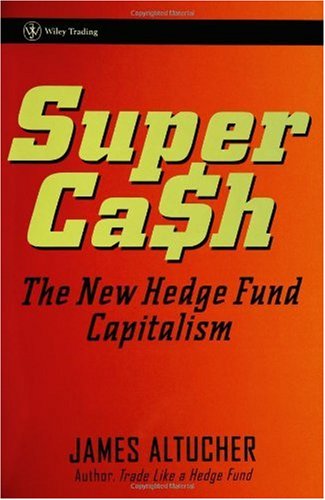
E) More control over content and design. Look at this cover for SuperCa$h, designed by a traditional publisher for me (this was my third book). It’s hideous.
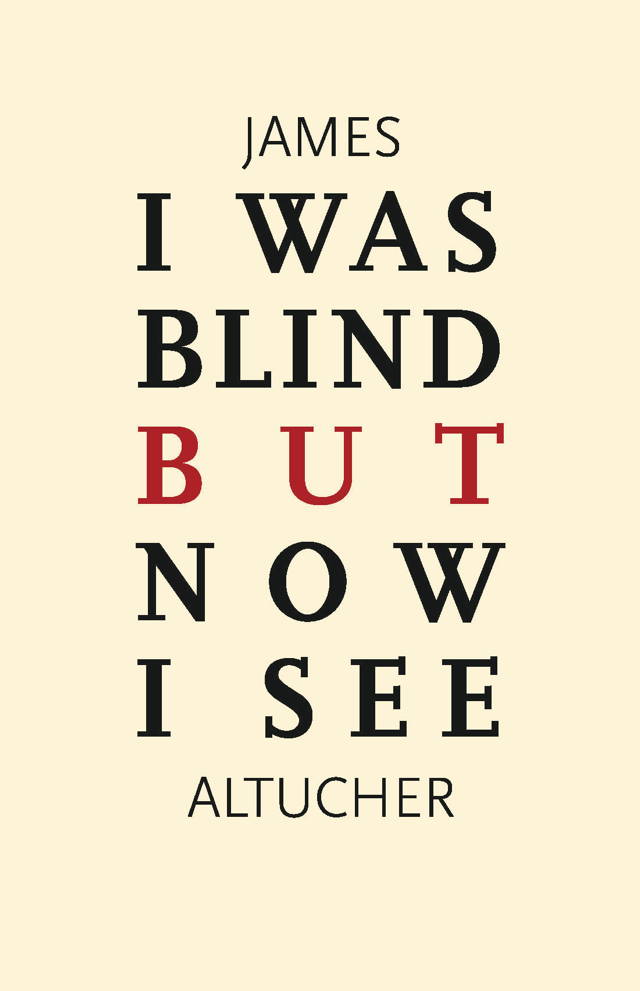
Now look at the cover for my last book (self-published), I Was Blind But Now I See. You may or may not like it, but it’s exactly what I wanted. Publishers even include in the contract that they have final say over the cover, and this is one detail they will not negotiate.
You also don’t have any teenage interns sending you editorial comments that you completely disagree with. YOU control your own content.
Now,
WHY SHOULD ENTREPRENEURS SELF-PUBLISH?
A) You have content. I have enough material in my blog right now (including my “drafts” folder, which has 75 unpublished posts in it) to publish five more books over the next year. And I’m sure that number will increase over the next year as I write more posts. You’re an entrepreneur because you feel you have a product or an idea or a vision that stands out among your competitors (if you don’t stand out, pack it in and come up with a new idea).
You know how to do something better than anyone else in the world. How do you let the world know that you are better? A business card won’t cut it. People will throw it away. And everyone’s got a website with an “About” page.
Give away part (or all) of your ideas in a book. You’re a brand new social media agency? How should social media work? Write it down. You’re a new CRM software package? How should CRM be better? Tell me. How should online dating services work? Tell some stories. Heck, make them as sexy as possible.
Don’t have time to write it? Then tell it to a ghostwriter you outsource to for almost no money. You don’t need 60,000 words. Do it in 20,000 words. Throw some pictures in. Just do it. Then, when you meet someone and they ask for your business card, how cool will it be when you can say, “Here, take my book instead.”
B) You have more to say. More and more companies have blogs. Many of the posts on the blog are “evergreen,” i.e. they last forever and are not time-specific. If you just take the posts (mentioned in the point above) and publish them, people will say, “He’s just publishing a collection of posts.” A couple of comments on that.
1. So what? It’s ok if you are curating what you feel your best posts are. And for a small price, people can get that curation and read it in a different format. There’s value there.
2. Don’t just take a collection of your posts.  A blog post is typically 500 to 2,000 words. Usually closer to 500. Do a bit more research for each post. Do intros and outros for each post. Make the chapters 3,000 to 4,000 words. Make a bigger arc to the book by using original material to explain WHY this book, with these chapters, presented in this manner is a different read than the blog. Have a chapter specifically explaining how the book is different from the blog.
With my last book, I Was Blind But Now I See, I had original material in each chapter, and several chapters that were completely original. Instead of it being a collection of posts, the overall book was about how we have been brainwashed in society, and how uncovering the brainwashing and using the techniques I describe can bring happiness. This was covered in a much more detailed fashion than the blog ever could, even though the material was inspired by several of my posts.
C) Amazon is an extra platform for you to market your blog. Or vice versa. You won’t make a million dollars on your book (well, maybe you will—never say never), but just being able to say, “I’m a published author” extends your credibility as a writer/speaker/enterpreneur when you go out there to sell your book, syndicate your blog elsewhere, or get speaking engagements, etc. And when you do a speaking engagement, you can now hand something out—your book! So Amazon and publishing become a powerful marketing platform for your overall writing/speaking/consulting career.
D) Nobody cares. Some people want the credibility of saying “Penguin published me.” I can tell you from experience—nobody ever asked me who was my publisher when Penguin was my publisher. And, by the way, Penguin was the worst publisher I ever had.
E) How will I get in bookstores? I don’t know. How will you? Traditional publishers can’t get you there either. Often bookstores will look at what’s hot on Amazon and then order the books wholesale from the publishers. In many cases, tradtional publishers will take their most-known writers (so if you are in that category, congrats!) and pay to have them featured at a bookstore. As for my experience, my traditional publishers would get a few copies of my books in the bookstores of major cities (i.e., NYC and that’s it), but nothing more.
OK, I’M CONVINCED. HOW DO I SELF-PUBLISH?
There are lots of ways to do it, but I’ll tell you my experience.
A) First write the book. For my last two self-published books, as mentioned above, I took some blog posts, rewrote parts of them, added original material, added new chapters, and provided an overall arc as to what the BOOK was about, as opposed to it just being a random collection of posts. But, that said, you probably already have the basic material already.
B) CreateSpace. I used CreateSpace because they are owned by Amazon and have excellent customer service. They let you pick the size of your book and then have Microsoft Word templates that you download to format your book within. For my first book I did this by myself; for my second book, for a small fee, I hired Alexanderbecker.net to format the book, create the book design, and create the final PDF that I uploaded. He also checked grammar, made proactive suggestions on font (sans serif instead of serif), and was extremely helpful.
C) Upload the PDF. Createspace approves it, picks an ISBN, sends you a proof, and then you approve it.
D) Within days its available on Amazon. It’s print-on-demand as a paperback. And by the way, your total costs at this point: $0. Or whatever you spent to design your cover.
E) Kindle. All of the above (from Createspace) was free. If I didn’t hire Alex to make the cover I could’ve used over 1 million of Createspace’s possible covers (I did that for my first book) and the entire publishing in paperback would be free. But with Kindle, CreateSpace charges $70 and they take care of everything until it’s uploaded to the Kindle store. Now you are available in paperback and Kindle.
F) Marketing.
1. Readers of my blog who asked for it got the first 20 copies or so for free from me. Many of them then posted good reviews on Amazon to get the ball rolling.
2. I’ve been handing out the books at speaking engagements. Altogether, I’ll do around 10 speaking engagements handing my latest book out.
3. I write a blog post about how the book is different from the blog and why I chose to go this route.
4. Writing guests posts for blogs like Techcrunch helps, and I’m very grateful.
5. Twitter, Facebook, Linkedin, and Google+ are also very helpful.
G) Promotions. You’re in charge of your own promotions (as opposed to a book publisher). For instance, in a recent blog post, I discussed the differences between my latest book and my blog, and I also offered a promotion on how to get my next self-published book (Bad Behavior, expected in Q1 2012) for free.
Entrepreneurs are always looking for ways to stand out, promote their service, and get validation for their offerings. Writing a book makes you an expert in the field. At the very least, when you hand someone a book you wrote, it’s more impressive than handing a business card. It shows that you have enough expertise to write the book. It also shows you value the relationship with the potential customer enough that you are willing to give him something of value. Something you created.
And you can’t use the excuse “I don’t have time, I’m running a business.” Entrepreneurs make time. And they have the ideas, so, again, at the very least you can use elance.com to hire a ghostwriter.
Over the next year, I have five different books planned, all on different topics. I’m super excited about them because I’m allowed to push the barrier in every area I’m interested in, and there’s nobody to stop me. There’s nobody I need validation from. I get to pick myself.
You can do this too. And you should. There’s no more excuses in this environment. Good luck, and feel free to write me with any questions.
–