Showing posts with label Amazon. Show all posts

Friday, June 6, 2014

Around the Word

Alternative design for Penguin Random House
Penguin Random House finally releases their official logo this week, and reactions have definitely varied. In the aftermath, Publishers Weekly published an alternative design that readers voted on after holding a contest when the merger was first announced.

The Hachette/Amazon dispute  continues as authors such as John Green, J.K Rowling, James Patterson, Malcom Gladwell, and even Stephen Colbert  speak out against Amazon. Missed out on all the news regarding the disagreement? LA Times breaks it down in 13 easy steps.

Amy Einhorn leaves the imprint she founded at Penguin Random House and joins Macmillion’s Flatiron Books imprint as senior VP and publisher. Originally a non-fiction imprint, Einhorn will be bringing her literary and commercial fiction background along with a staff of fiction editors to Flatiron Books.

Maya Angelou’s Memorial service will be broadcast live from Wake Forest University where she has taught since 1982. Tune in June 7, 2014 at 10 a.m. to watch.

Monday, July 8, 2013

Guest Post: Amazon's White Glove Publishing Service

by Andrew Crofts

There are any number of ways that a book can stumble on its journey from your brain to your readers’. One of the most common blockages is with the literary agent. Your agent loves your book and is confident she can sell it—but six months later she has failed to get a publisher on board.

But what if an agent who is keen on a book were in a position to “publish” it herself? Amazon has spotted this niche, and is now offering a service called White Glove. In this arrangement, the agent does all the liaising with Amazon and helps with the publishing process, and then she gets her standard 15 percent of anything the author earns from the deal.

Why partner with an agent when it’s not hard to do the self-publishing thing yourself? For one thing, it is so much better to have someone else who believes in your book, agrees to put time and effort into its publication, and generally shares the ride. In addition, a book’s chances of success are vastly improved if someone other than the author is behind it. If an agent does this for you, you have already gotten your first endorsement.

Last year I wrote a novel called Secrets of the Italian Gardener, set inside the palace of a dictator about to be overthrown in the Arab Spring. The narrator is a ghostwriter who, while writing a book for the dictator, meets a wise, elderly Italian gardener who gradually unravels the story of who really holds the power and wealth in this world. As the rebels draw closer to breaching the palace walls, the ghostwriter is also struggling with his own breaking heart.

I sent the manuscript to someone at United Agents, one of the biggest agencies in London, whom I have known for many years, and he came back brimming with enthusiasm. He wanted no rewrites, and he was sure he could sell the project.

Six months later, he had failed to convince any publishers. In the old days, that would have been the end of the story. But we turned instead to Amazon’s White Glove service.

Highly skilled Amazon staff did all the heavy lifting to get the book up onto the site, ready for print-on-demand as well electronic publication. It became a team effort rather than a lone author’s voice in the crowd, and should the book start to gain traction in the marketplace, the agency is already fully engaged and ready to handle the business side of taking it to the next level.

The book is now available on Amazon, and it has been a terrific experience all around. I am keen to see where things will go from here.


Andrew Crofts is a ghostwriter and author who has published more than eighty books, many of which were Sunday Times bestsellers, and has guided a number of international clients through the minefield of independent publishing. He has spent much of his career among dictators, politicians, arms dealers, and billionaires, passing time in their lavish palaces and heavily guarded compounds in the wildest parts of Africa, Asia, and the Middle East, as well as in tax havens like Monaco, Bermuda and the Caribbean. He lectures about making a living from writing at Kingston University and frequently guests at writing workshops, literary festivals, and in the media. He blogs regularly on matters pertaining to publishing, self-publishing and writing. Find him at www.andrewcrofts.com.

Wednesday, March 6, 2013

Around the Word: Book Discovery

Book Discovery. How do readers decide what book to read next? This process, known as "book discovery," is the latest buzz phrase in the online book marketing world. Every day there seems to be a new article or blog post debating the merits of various websites hoping to woo visitors with their book recommendations or browsing tools. This trend is growing so quickly that Publishing Perspectives is already asking if the book discoverability bubble is ready to pop. Trying to make sense of it all? A recent article on Forbes clearly lays out the online book market, customer habits, and book discovery options.

Decisions, Decisions. With so many websites trying to find the sweet spot of book discovery, there are lots of options to explore. Most people are familiar with Amazon's recommendations. But if you're looking for a more tailored experience, many book discovery websites are trying to more carefully cater to customer preferences. Bookish, launched earlier this year, is "an exercise in big data" as CEO Ardy Khazaei explains. The site will use everything from genres and authors to editorial themes and reviews to make its recommendations. Then there's Goodreads, probably the most well known and established book discovery tool, which crowdsources peer recommendations and reviews to make its selections.  Looking for something a little more exclusive? Riffle is a new invite-only book discovery site that's been compared to Pinterest. It's powered through a Facebook app that allows users to share books with friends, create lists, and see industry experts' curated pages. Still hungry for more book discovery options? Check out The Nudge List, Amazon's Shelfari, or Rabble, a Rotten Tomatoes–like website with expert reviews that is set to launch in April.

Word of Mouth. Even with all these options, the real-world experience of getting book recommendations from friends still reigns supreme. A recent Goodreads survey found that "trusted friend" remains the top reason respondents decided to read a book, followed by "everyone talking about it" and "book club." Another study, conducted by Codex Group, underscores just how far online book discovery has to go: only 7 percent of frequent online book buyers said they actually "discovered" the last book they purchased on the internet. Why can't book discovery websites seem to break through? The New Republic's Hillary Kelly has a thoughtful take: "Data has no imagination. When it comes to book recommendations, attempts to sort or streamline or mathematize them necessarily dehumanizes the process. The very nature of the endeavor, much like digesting Ulysses, requires an infinitely more complex machine: the human brain."

Wednesday, September 12, 2012

Around the Word

Reviewola. There's been a lot of talk recently about the rise pay-for-play, and the general lack of transparency and accountability in the book review business, especially when it comes to self-publishing. Getting those stars on Amazon can make or break a book's success, so it's unfortunately unsurprising that there are those who will write a positive review—for a price. Data mining expert Bing Liu estimates that "about one-third of all consumer reviews on the Internet are fake. And it's not just paid reviews that are problematic: "puppet" reviews by authors themselves (or their spouses) are also a serious issue. Bestselling UK author ER Ellory came under fire recently for using several pseudonyms to flood his Amazon page with positive feedback. It is all but impossible to tell when reviews have been written by marketers, retailers, authors themselves, or by customers who can get a deal from a merchant for giving a good score. So what's a book lover to do? The Society of Authors has issued a call to arms of sorts, suggest that readers should take to Amazon and reclaim the reviews from the puppeteers. In the meantime, GalleyCat has put out this handy guide to decoding Amazon's star system.

Writers are from Mars, Editors are from Venus. Here at the GG office we frequently refer to ourselves as matchmakers or couples therapists for writing relationships, and this piece in the Columbia Journalism Review, "Five Types of Problem Writers," and its accompanying entry on the author's blog (complete with gifs!) caught our eye. Some represented types: the "newbie" writer who has yet to grow the emotional calluses to deal with the sometimes harsh reality of critism, or the power-drunk sadistic editor who eviscerates just to eviscerate, leaving a manuscript littered with backhanded comments. Do you recognize yourself in the list, or maybe someone you've worked with? How do you deal with a less-than-easy collaborator?

The Best of the Worst. Every year The Bulwer-Lytton Fiction Contest, the literary world's version of film's Razzie Awards, "celebrates" the worst passages written in the past year. (The contest was named for the author who penned what is arguably the best-worst line in literary history: "it was a dark and stormy night.") This year's top prize went to Cathy Bryant of Manchester for this gem:
As he told her that he loved her she gazed into his eyes, wondering, as she noted the infestation of eyelash mites, the tiny deodicids burrowing into his follicles to eat the greasy sebum therein, each female laying up to 25 eggs in a single follicle, causing inflammation, whether the eyes are truly the windows of the soul; and, if so, his soul needed regrouting.
She was congratualated by last year's winner, Suzanne Fondrie: “I take pleasure in passing the guttering torch of Bad Writing to this year’s winner. May you write long and badly, Cathy!”

Thursday, July 19, 2012

Around the Word

Is Your E-Book a Fake? Knock-offs aren't just for fashion, and Amazon has become the Chinatown of e-book fakes. The online retailer's not just selling them—most of the offenders are products of Amazon's self-publishing imprint CreateSpace. If you're looking for Walter Issacson's bestselling bio of Steve jobs, make sure you don't get fooled by Steve Jobs by Issac Worthington. Beware of Fast and Slow Thinking by Karl Daniels, which strikes uncomfortably close to the real-deal Thinking Fast and Slow by Nobel laureate Daniel Kahneman. When searching for Girl with the Dragon Tattoo, one top result is I Am the Girl with the Dragon Tattoo. The solitary review for that book notes: "this is almost certainly copyright infringement. the author chose a popular book title, added 'i am' to the beginning, and calls it legitimate. of course, anyone who is looking for these things should know better." Technically speaking, titles of books aren't copyrighted, but the legal line here is definitely blurry.

Stephen Covey's Legacy of Leadership Lit. Last week, author and father of the thought-leadership genre Stephen Covey passed away from injuries he suffered in a bike accident in April. Covey's seminal works—including 7 Habits of Highly Effective People, The 8th Habit: From Effectiveness to Greatness, and First Things First—have sold millions of copies and influenced some of the biggest names in corporate America. It's arguable that 7 Habits was responsible for catapulting thought-leadership books from a niche market to a mainstream genre, as well as making a "book as badge" the new must-have for high-powered business gurus. So the next time you land a high-paying job editing (or ghostwriting) a "big idea" piece for the latest whiz-kid CEO, thank Covey for paving the way. 

Big Brother Is Reading You. Or, rather, he's reading your Kindle, according to the Wall Street Journal. E-books, which have officially outsold "analog" books this year, are the newest frontier of consumer data mining. Until now, publishers have been mostly in the dark about what happens after a book leaves the store, but no longer. Whether you download a book but don't read it, start a book and don't finish it, or tear through an entire series in a matter of days, that information is now available to those who most want to know. Some publishers are excited about the opportunity to hone their offerings according to market forces, like finding the perfect length for an e-book or coming up with a formula for ideal content, but others fear that a data-driven marketplace will have a homogenizing effect, not to mention potential privacy pitfalls. What do you think? Can boiling the book business down to an algorithm be good for the marketplace and the marketplace of ideas? Or does having the publishing industry reading over your shoulder give you a case of the digital willies?


Scalia Rules on Crimes Against Grammar. What do liberal lawyer Bryan Garner and conservative SCOTUS Justice Antonin Scalia have in common? According to this New Yorker piece, they're both SNOOTS set on righting the wrongs legal writing exacts on the English language. The two men, who bonded during a lunch meeting at which Scalia gushed over David Foster Wallace's essay "Tense Present," have collaborated on two books about the role of grammar and persuasion in legal writing. Although they disagree about politics—and the acceptability of contractions (which, according to Scalia, are “intellectually abominable, but commercially reasonable”)—they were able to withstand an exacting collaboration that produced 216 drafts before finalizing their second book, Reading Law: The Interpretation of Legal Texts. While their partnership has begun to shine a light on the issue, Garner is well aware that it'll be an uphill battle to raise the, er, bar when it comes to legal writing. “Word for word," he said, "lawyers are the most highly paid professional writers in the world. But the literary tradition in the profession is probably the worst."

Thursday, February 2, 2012

Around the Word

Big, bad Amazon. Tech news site PandoDaily doesn't feel bad for publishing companies these days. They share a long email from an anonymous publisher that's well worth a read, as it lays out a very pessimistic, very paranoid, and very probably true view of Amazon's long-range plans for a publishing industry takeover. The publisher's verdict: "Publishing is a quaint little industry based on romance and low profit margins. But now we're in Amazon's sights, and they're going to kill us."

Pin that speech! Are you using cool new social sharing site Pinterest? The site allows users to "pin" items of interests (videos and images) to themed boards, which are then visible to anyone who follows you. While early adopters have mostly been interior designers and wedding planners, speechwriting blog The Eloquent Woman shows how versatile the site can be, by creating a Pinterest board full of speeches by famous ladies, as well as "Ideas, information and inspiration for women (and men) on public speaking and presenting."

Novel groupthink. In Australia, The Sydney Morning Herald has facilitated the creation of the first crowdsourced novel, GalleyCat reports. The newspaper published each chapter, giving readers two days to submit the next one, and an editor selected the best of the bunch to publish. You can read the entire novel, called The Necklace, here.

Kill "caps lock"? Over on Slate, there's a terrific article filled with suggested commonsense tweaks to the modern computer keyboard, along with clear, justified reasons for each. It's terribly nerdy, but also terribly smart. Why do we still need keys like "pause/break"? Why don't we have a dedicated key for an ellipses or em-dash? Why is the exclamation point so far away from the period and question mark? We'd love to see some or all of these changes implemented. Do you have other ideas for a better keyboard? Share them in the comments.

Wednesday, February 1, 2012

Guest Post: Why Every Entrepreneur Should Self-Publish a Book

BY JAMES ALTUCHER. 


This article originally appeared on TechCrunch.


snoopy_writing
I’ve published eight books in the past seven years, five with traditional publishers (Wiley, Penguin, HarperCollins), one comic book, and the last two I’ve self-published. In this post I give the specific details of all of my sales numbers and advances with traditional publishers. Although the jury is still out on my self-published books, How to be the Luckiest Person Alive and I Was Blind But Now I See, I can tell you these two have already sold more than my five books with traditional publishers combined.
If you, the entrepreneur, self-publish a book, you will stand out, you will make more money, you will kick your competitors right in the XX, and you will look amazingly cool at cocktail parties. I know this because I am seldom cool, but at cocktail parties, with my very own comic book, I can basically have sex with anyone in the room. But don’t believe me; it costs you nothing and almost no time to try it yourself.
The rest of this article is really three discussions: Why self-publish rather than using a traditional publisher; why entrepreneurs should self-publish; and finally, HOW does one go about self-publishing. 
WHY: 
A) Advances are going to zero. Book publishers are getting more and more squeezed by declining booksellers so they, in turn, have to squeeze the writers. Because of so much free content on the Internet, the value per unit of content is going to zero unless you are already an established name-brand author.
B) Lag time. When you self-publish, you can have your book up and running on Amazon, paperback and Kindle, within days. When you publish with a traditional publisher, it's a grueling process: book proposal, agents, lawyers, meetings, edits, packaging, catalogs, etc., which ensures that your book doesn’t actually get published until a year later. Literally, as I write this, a friend of mine just IMed me the details of a book deal he just got with a mainstream publisher. Publication date: 2014.
C) Marketing. Publishers claim they do a lot of marketing for you. That’s laughable. I’ll give you a very specific story. When I published with Penguin, they then met with a friend of mine whose book they wanted to publish. They didn’t realize she was my friend. She asked them, “What marketing did you do for James Altucher’s book?” They said, “Well, we got him a review in The Financial Times and we got a segment about his book on CNBC and an excerpt in thestreet.com”
Here’s what’s so funny. I had a weekly column in The Financial Times. I WROTE my own review. As a joke. For CNBC, I had a weekly segment, so naturally I spoke about my book during my regular segment. And for thestreet.com excerpt, I had just sold my last company to thestreet.com. So instead of doing my usual article for them, I did an excerpt. In other words, the publisher did NOTHING, but took credit for EVERYTHING. Ultimately, authors (unless you are Stephen King, etc.) have to do their own marketing for books. The first question publishers ask, even before they look at your proposal, is “How big is your platform?” They want to know how you can market the book and whether they can make money on just your own marketing efforts.
D) Better royalties. When I self-publish I make about a 70% royalty instead of the 15% royalty I get with a traditional publisher. I also own 100% of the foreign rights instead of 50%. I hired someone to sell the foreign rights and they got 20% (and no upfront fee).
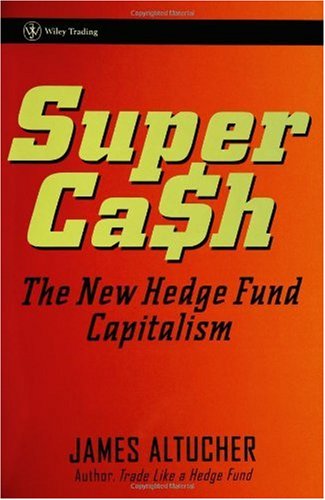
E) More control over content and design. Look at this cover for SuperCa$h, designed by a traditional publisher for me (this was my third book). It’s hideous.
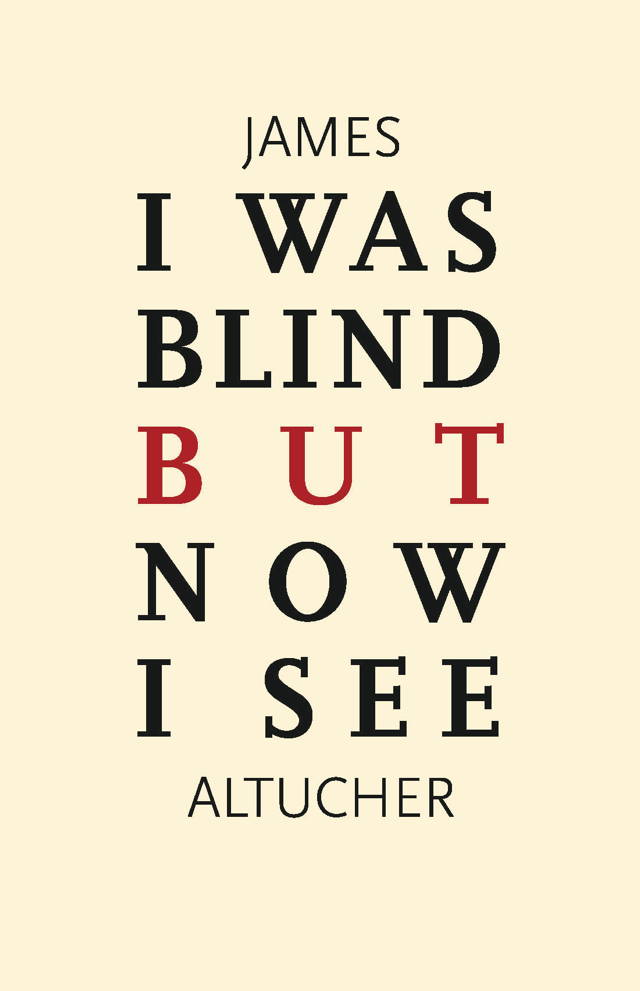
Now look at the cover for my last book (self-published), I Was Blind But Now I See. You may or may not like it, but it’s exactly what I wanted. Publishers even include in the contract that they have final say over the cover, and this is one detail they will not negotiate.
You also don’t have any teenage interns sending you editorial comments that you completely disagree with. YOU control your own content.
Now,
WHY SHOULD ENTREPRENEURS SELF-PUBLISH?
A) You have content. I have enough material in my blog right now (including my “drafts” folder, which has 75 unpublished posts in it) to publish five more books over the next year. And I’m sure that number will increase over the next year as I write more posts. You’re an entrepreneur because you feel you have a product or an idea or a vision that stands out among your competitors (if you don’t stand out, pack it in and come up with a new idea).
You know how to do something better than anyone else in the world. How do you let the world know that you are better? A business card won’t cut it. People will throw it away. And everyone’s got a website with an “About” page.
Give away part (or all) of your ideas in a book. You’re a brand new social media agency? How should social media work? Write it down. You’re a new CRM software package? How should CRM be better? Tell me. How should online dating services work? Tell some stories. Heck, make them as sexy as possible.
Don’t have time to write it? Then tell it to a ghostwriter you outsource to for almost no money. You don’t need 60,000 words. Do it in 20,000 words. Throw some pictures in. Just do it. Then, when you meet someone and they ask for your business card, how cool will it be when you can say, “Here, take my book instead.”
B) You have more to say. More and more companies have blogs. Many of the posts on the blog are “evergreen,” i.e. they last forever and are not time-specific. If you just take the posts (mentioned in the point above) and publish them, people will say, “He’s just publishing a collection of posts.” A couple of comments on that.
1. So what? It’s ok if you are curating what you feel your best posts are. And for a small price, people can get that curation and read it in a different format. There’s value there.
2. Don’t just take a collection of your posts.  A blog post is typically 500 to 2,000 words. Usually closer to 500. Do a bit more research for each post. Do intros and outros for each post. Make the chapters 3,000 to 4,000 words. Make a bigger arc to the book by using original material to explain WHY this book, with these chapters, presented in this manner is a different read than the blog. Have a chapter specifically explaining how the book is different from the blog.
With my last book, I Was Blind But Now I See, I had original material in each chapter, and several chapters that were completely original. Instead of it being a collection of posts, the overall book was about how we have been brainwashed in society, and how uncovering the brainwashing and using the techniques I describe can bring happiness. This was covered in a much more detailed fashion than the blog ever could, even though the material was inspired by several of my posts.
C) Amazon is an extra platform for you to market your blog. Or vice versa. You won’t make a million dollars on your book (well, maybe you will—never say never), but just being able to say, “I’m a published author” extends your credibility as a writer/speaker/enterpreneur when you go out there to sell your book, syndicate your blog elsewhere, or get speaking engagements, etc. And when you do a speaking engagement, you can now hand something out—your book! So Amazon and publishing become a powerful marketing platform for your overall writing/speaking/consulting career.
D) Nobody cares. Some people want the credibility of saying “Penguin published me.” I can tell you from experience—nobody ever asked me who was my publisher when Penguin was my publisher. And, by the way, Penguin was the worst publisher I ever had.
E) How will I get in bookstores? I don’t know. How will you? Traditional publishers can’t get you there either. Often bookstores will look at what’s hot on Amazon and then order the books wholesale from the publishers. In many cases, tradtional publishers will take their most-known writers (so if you are in that category, congrats!) and pay to have them featured at a bookstore. As for my experience, my traditional publishers would get a few copies of my books in the bookstores of major cities (i.e., NYC and that’s it), but nothing more.
OK, I’M CONVINCED. HOW DO I SELF-PUBLISH?
There are lots of ways to do it, but I’ll tell you my experience.
A) First write the book. For my last two self-published books, as mentioned above, I took some blog posts, rewrote parts of them, added original material, added new chapters, and provided an overall arc as to what the BOOK was about, as opposed to it just being a random collection of posts. But, that said, you probably already have the basic material already.
B) CreateSpace. I used CreateSpace because they are owned by Amazon and have excellent customer service. They let you pick the size of your book and then have Microsoft Word templates that you download to format your book within. For my first book I did this by myself; for my second book, for a small fee, I hired Alexanderbecker.net to format the book, create the book design, and create the final PDF that I uploaded. He also checked grammar, made proactive suggestions on font (sans serif instead of serif), and was extremely helpful.
C) Upload the PDF. Createspace approves it, picks an ISBN, sends you a proof, and then you approve it.
D) Within days its available on Amazon. It’s print-on-demand as a paperback. And by the way, your total costs at this point: $0. Or whatever you spent to design your cover.
E) Kindle. All of the above (from Createspace) was free. If I didn’t hire Alex to make the cover I could’ve used over 1 million of Createspace’s possible covers (I did that for my first book) and the entire publishing in paperback would be free. But with Kindle, CreateSpace charges $70 and they take care of everything until it’s uploaded to the Kindle store. Now you are available in paperback and Kindle.
F) Marketing.
1. Readers of my blog who asked for it got the first 20 copies or so for free from me. Many of them then posted good reviews on Amazon to get the ball rolling.
2. I’ve been handing out the books at speaking engagements. Altogether, I’ll do around 10 speaking engagements handing my latest book out.
3. I write a blog post about how the book is different from the blog and why I chose to go this route.
4. Writing guests posts for blogs like Techcrunch helps, and I’m very grateful.
5. Twitter, Facebook, Linkedin, and Google+ are also very helpful.
G) Promotions. You’re in charge of your own promotions (as opposed to a book publisher). For instance, in a recent blog post, I discussed the differences between my latest book and my blog, and I also offered a promotion on how to get my next self-published book (Bad Behavior, expected in Q1 2012) for free.
Entrepreneurs are always looking for ways to stand out, promote their service, and get validation for their offerings. Writing a book makes you an expert in the field. At the very least, when you hand someone a book you wrote, it’s more impressive than handing a business card. It shows that you have enough expertise to write the book. It also shows you value the relationship with the potential customer enough that you are willing to give him something of value. Something you created.
And you can’t use the excuse “I don’t have time, I’m running a business.” Entrepreneurs make time. And they have the ideas, so, again, at the very least you can use elance.com to hire a ghostwriter.
Over the next year, I have five different books planned, all on different topics. I’m super excited about them because I’m allowed to push the barrier in every area I’m interested in, and there’s nobody to stop me. There’s nobody I need validation from. I get to pick myself.
You can do this too. And you should. There’s no more excuses in this environment. Good luck, and feel free to write me with any questions.
–

Monday, December 19, 2011

Around the Word

The best gift for a writer. For those of you who prize creative gifts that don't necessarily cost a lot, and especially for those having a Buy Nothing Christmas, GalleyCat has an excellent suggestion for the writer in your life: give the gift of time. Among other ideas, you can "let them borrow your office on the weekend...promise to babysit on a weekday evening...volunteer to do their household chores for a day...in short, do anything it takes to help your writer friend find a few consecutive hours of peace and quiet to write." In the article's comments, writers suggested a second (free) gift idea: read their book and give them a positive review on Amazon or another book site. Any other ideas for non-traditional gifts for writers? Tell us in the comments.

Winning words. PR Newswire revealed earlier this month that for the first time, Oxford English Dictionaries in both the US and the UK chose the same phrase for Word of the Year: "squeezed middle." Here at GG, we didn't think that was such a great pick. In contrast, this list from Flavorwire of the Most Memorable Words of the Year seems a lot more comprehensive, and includes some terrific ones, like "Arab Spring," "occupy," and "planking." Are there any words you think they forgot?

Losing words. Speaking of words of the year, Marist announced the results of their poll for the years most annoying word. We'll skip the suspense and tell you that for the third year in a row, the winner is "whatever," with "like," "you know," and "just sayin'" close behind. Do you agree?

Memorable closers. For those speech-givers and -writers out there, there are a lot of things to take into consideration when planning out a winning speech. You should of course consult our friend Fletcher Dean's terrific book 10 Steps to Writing a Vital Speech, and to supplement that, Ragan has a list of 5 great ways to close.

Wednesday, December 14, 2011

Around the Word

Curb your e-thusiasm: While there has been a lot of doom and gloom about the fate of brick-and-mortar bookstores, the New York Times found that independent bookstores are actually having a booming holiday season this year. While everyone was sure that the economic recession, aggressive Amazon tactics, and the popularity of e-books were destined to put a dent in sales, people seem to be walking into actual bookstores to purchase physical books at a pretty good clip. Are print books on your holiday shopping list?

Indiefficient: Though many book lovers will rejoice at the cheerful holiday outlook for independent bookstores, Slate columnist Farhad Manjoo doesn't think indie bookstores are necessarily worth saving. In a criticism of Richard Russo's NYT op-ed slamming Amazon for killing the bookshop around the corner, Manjoo argues that local bookstores are not all that "local" and are also massively inefficient. Buy two books on Amazon, he suggests, instead of one at a indie bookshop for the same price. Do you agree?

LinkedIn lexicon: You may consider yourself a motivated and efficient professional with dynamic communication skills, but unfortunately so does everyone else on the business networking site LinkedIn. The site recently released its list of the most overused professional buzzwords of 2011, with "creative" and "organizational" topping the list. What's on your personal list of annoying professional jargon?

Talk the talk: "Write like you talk" is a classic piece of writing advice, but would you really want to read something that sounds the way most people talk? Men With Pens blogger Taylor Lindstrom always took issue with this advice, until he reconsidered that maybe the problem wasn't with writing like you talk, but with not talking well enough. His advice: always think about your words, even in casual communication, and get in the habit of expressing yourself well all the time. "Write the way you talk," he writes, as long as "you can speak persuasively, eloquently, and clearly."

Tuesday, December 13, 2011

Around the Word

Publishing house of ill repute: What do you think of Amazon's reputation as a publisher? GalleyCat took a look at the retail giant's rep at their Publishing App Expo last week after an audience member asked if the publishing community looked down on Kindle authors. Though some consider collaborating with Amazon to be selling out, others see a great opportunity for exposure, since Amazon has the largest share of the e-book market.

The perfect platform: Finding the right angle or hook to sell your book can be tricky, but agent and blogger Rachelle Gardner has some tips on building the right platform for your work. Check out her post on ways to leverage your expertise into a strong selling stance for your nonfiction writing.

Bro books: A new online site selling books geared toward guys seems like the perfect solution for those who are stumped about what to get their brothers and boyfriends for the holidays. But the Man Cave pop-up bookstore has let some word nerds down by focusing on titles like How Do You Light a Fart? and Sweet 'Stache: 50 Badass Mustaches and the Faces Who Sport Them. For slightly more sophisticated titles for the manly man in your life, check out this article by the Utne Reader.

Viral visuals: Getting your content to "go viral" can be an elusive challenge, but ProBlogger has broken down the task with this fun infographic. Check out this visual guide to writing killer content, connecting across platforms, and encouraging sharing.

Friday, December 9, 2011

Around the Word

Self-pub superlatives: Highlighting the recent trend of self-published authors striking it big, the Wall Street Journal ran a story on best-selling author Darcie Chan today. Like other self-pub standouts, Chan had a great novel but no publisher. She turned to e-books to find and outlet for her work and has sold 400,000 copies, putting her on par with other successes like Amanda Hocking and John Locke.

A showroom of one's own: We wrote earlier this week about a recent poll finding that 24 percent of online book buyers purchase a book after seeing it in a brick-and-mortar store first, a practice referred to as "showrooming." In Time magazine this week, Emma Straub, a bookseller at Brooklyn's BookCourt, gives her two cents about this alarming trend. Though Amazon offers access to books for many people who aren't lucky enough to have a local bookstore, Straub takes issue with people who use BookCourt as a showroom. "We’re talking about the people who do live close enough to independent bookstores to stroll their aisles," Straub writes. "Because this story is about those people selling the bookstores out for a better deal." What do you think? Are showroomers soulless or just savvy shoppers?

Vital visibility: Online writers often struggle with a difficult challenge: how do you make your writing audible over the noise of the rest of the Internet? Author and content marketing expert Rebecca Lieb gave an illuminating interview to GalleyCat with tips on how to make your work stand out. For example, she says that writers have a leg up, given that search engines traffic in the written word. What tips do you have for writing attention-grabbing content?

Greatest gobbledygook: The Plain English Campaign is on a mission to end pretentious jargon and confusing public communication in the UK. This year, the organization has awarded the UK's Meteorological Office their Golden Bull "booby prize" for the worst offense in public discourse: The Met Office began predicting "probabilities of precipitation" instead of the chance of rain last November. The Plain English Campaign describes their motivations to the BBC: "Even though most people agree that plain English is plain common sense, our government needs to make it a legal duty that public communications are crystal-clear." Do you agree?

Tuesday, December 6, 2011

Around the Word

Rate your rhetoric: Have you written a spectacular speech this year? Find out how it stacks up against its industry competition by submitting to the 2012 Cicero Speechwriting Awards. The Cicero Awards recognize the best work in the speechwriting word, and Cicero winners receive publicity at major speechwriting events, including readings by GG friend and Vital Speeches of the Day editor David Murray. As the Cicero website puts it, "Not Twitter feeds, podcasts or blogs -- for politicians and CEOs, for military brass and church leaders, for activists and fundraisers, nothing substitutes for the power of a good speech to move audiences to action." Show off your skills by entering today.

Window shoppers: Brick-and-mortar bookstores have had a tough time in this recession, and now they have further proof that they're being undersold by their arch-enemy, Amazon. A new survey reported on the New York Times Media Decoder confirms that many book buyers see a book in a bookstore first, then go online to purchase it. Are these Amazonians shameless, or just saving money in a tough economy?

Platform building: Aspiring authors always hear about the importance of having an audience before their book is published, but how do you start to build that platform? Author Meghan Ward has a list of suggestions on her blog this week, from the helpful (Tumblr, podcasts, teaching, website) to the cheeky (become famous!). Is there anything you would add to her list?

Zombie-telling: In an brilliant confluence of pop-culture obsessions -- smartphones + digital storytelling + zombies -- a new app puts you in the middle of the zombie apocalypse while you're jogging. Zombies, Run! from Six to Start includes audio that sends you on missions, warns you of incoming zombies, and rewards you for your hard work staying alive. Set to release early next year, this app is one step toward the new frontier of interactive mobile storytelling. Will you be running from zombies?

Friday, November 18, 2011

Around the Word

Novel dysfunction: If the prospect of spending Thanksgiving with your family makes you feel less than grateful, consider turning to some literary inspiration for dealing with dysfunctional families. In honor of the holiday, Ploughshares Literary Magazine put together a list of the books about the darkest, craziest and unhappiest families. What's your favorite book about family feuds?

Fired up: Amazon's newest e-reader -- the tablet-style Kindle Fire -- has finally arrived, and the reviews are lukewarm. Slate technology writer Farhad Manjoo gives his take on the Fire, characterizing it as "underachieving" but priced low enough that it could successfully compete with the iPad. Manjoo also predicts that the Fire will lead to even more book sales than previous Kindles. Will you be buying a Fire this holiday season?

Unreasonable lending? In other Amazon news, the Authors Guild is pretty unhappy with Amazon's other new feature: the Kindle Owner's Lending Library. The AG issued a statement arguing that the lending library falls outside the realm of most publishing licensing contracts. They also have some tips for getting your book taken out of the library if it's there without your permission, GalleyCat reports. Is the Lending Library a good thing for authors, or a backhanded move by Amazon?

Best of the web: As any web-surfing word nerd knows, there's tons of writing advice on the Internet -- some of it good, and some if it not so good. Over at the Writing Resource, Erin Brenner compiled a list of her favorite advice on the writing process, from getting started to keeping your readers' attention. Do you have an article on writing that you refer to again and again?