
This article originally appeared on TechCrunch.

I’ve published eight books in the past seven years, five with traditional publishers (Wiley, Penguin, HarperCollins), one comic book, and the last two I’ve self-published. In this post I give the specific details of all of my sales numbers and advances with traditional publishers. Although the jury is still out on my self-published books, How to be the Luckiest Person Alive and I Was Blind But Now I See, I can tell you these two have already sold more than my five books with traditional publishers combined.
If you, the entrepreneur, self-publish a book, you will stand out, you will make more money, you will kick your competitors right in the XX, and you will look amazingly cool at cocktail parties. I know this because I am seldom cool, but at cocktail parties, with my very own comic book, I can basically have sex with anyone in the room. But don’t believe me; it costs you nothing and almost no time to try it yourself.
The rest of this article is really three discussions: Why self-publish rather than using a traditional publisher; why entrepreneurs should self-publish; and finally, HOW does one go about self-publishing.
WHY:
A) Advances are going to zero. Book publishers are getting more and more squeezed by declining booksellers so they, in turn, have to squeeze the writers. Because of so much free content on the Internet, the value per unit of content is going to zero unless you are already an established name-brand author.
B) Lag time. When you self-publish, you can have your book up and running on Amazon, paperback and Kindle, within days. When you publish with a traditional publisher, it's a grueling process: book proposal, agents, lawyers, meetings, edits, packaging, catalogs, etc., which ensures that your book doesn’t actually get published until a year later. Literally, as I write this, a friend of mine just IMed me the details of a book deal he just got with a mainstream publisher. Publication date: 2014.
C) Marketing. Publishers claim they do a lot of marketing for you. That’s laughable. I’ll give you a very specific story. When I published with Penguin, they then met with a friend of mine whose book they wanted to publish. They didn’t realize she was my friend. She asked them, “What marketing did you do for James Altucher’s book?” They said, “Well, we got him a review in The Financial Times and we got a segment about his book on CNBC and an excerpt in thestreet.com”
Here’s what’s so funny. I had a weekly column in The Financial Times. I WROTE my own review. As a joke. For CNBC, I had a weekly segment, so naturally I spoke about my book during my regular segment. And for thestreet.com excerpt, I had just sold my last company to thestreet.com. So instead of doing my usual article for them, I did an excerpt. In other words, the publisher did NOTHING, but took credit for EVERYTHING. Ultimately, authors (unless you are Stephen King, etc.) have to do their own marketing for books. The first question publishers ask, even before they look at your proposal, is “How big is your platform?” They want to know how you can market the book and whether they can make money on just your own marketing efforts.
D) Better royalties. When I self-publish I make about a 70% royalty instead of the 15% royalty I get with a traditional publisher. I also own 100% of the foreign rights instead of 50%. I hired someone to sell the foreign rights and they got 20% (and no upfront fee).
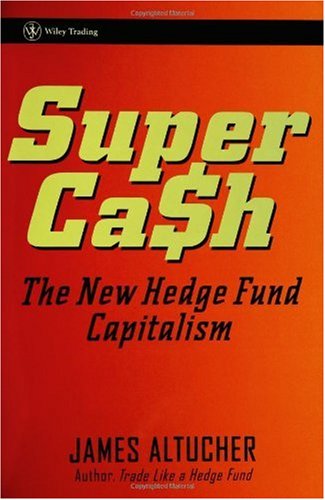
E) More control over content and design. Look at this cover for SuperCa$h, designed by a traditional publisher for me (this was my third book). It’s hideous.
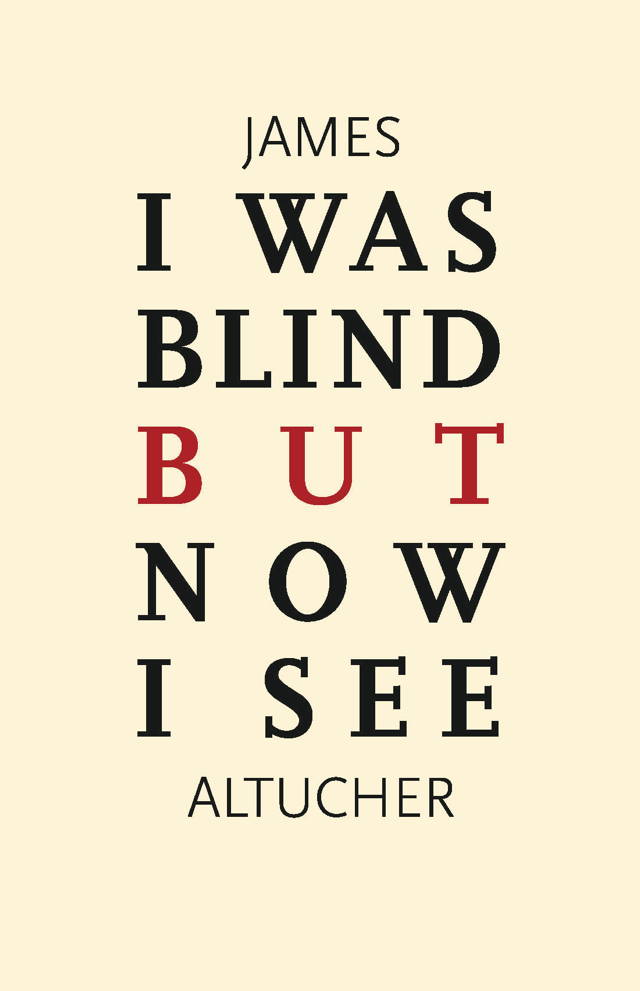
Now look at the cover for my last book (self-published), I Was Blind But Now I See. You may or may not like it, but it’s exactly what I wanted. Publishers even include in the contract that they have final say over the cover, and this is one detail they will not negotiate.
You also don’t have any teenage interns sending you editorial comments that you completely disagree with. YOU control your own content.
Now,
WHY SHOULD ENTREPRENEURS SELF-PUBLISH?
A) You have content. I have enough material in my blog right now (including my “drafts” folder, which has 75 unpublished posts in it) to publish five more books over the next year. And I’m sure that number will increase over the next year as I write more posts. You’re an entrepreneur because you feel you have a product or an idea or a vision that stands out among your competitors (if you don’t stand out, pack it in and come up with a new idea).
You know how to do something better than anyone else in the world. How do you let the world know that you are better? A business card won’t cut it. People will throw it away. And everyone’s got a website with an “About” page.
Give away part (or all) of your ideas in a book. You’re a brand new social media agency? How should social media work? Write it down. You’re a new CRM software package? How should CRM be better? Tell me. How should online dating services work? Tell some stories. Heck, make them as sexy as possible.
Don’t have time to write it? Then tell it to a ghostwriter you outsource to for almost no money. You don’t need 60,000 words. Do it in 20,000 words. Throw some pictures in. Just do it. Then, when you meet someone and they ask for your business card, how cool will it be when you can say, “Here, take my book instead.”
B) You have more to say. More and more companies have blogs. Many of the posts on the blog are “evergreen,” i.e. they last forever and are not time-specific. If you just take the posts (mentioned in the point above) and publish them, people will say, “He’s just publishing a collection of posts.” A couple of comments on that.
1. So what? It’s ok if you are curating what you feel your best posts are. And for a small price, people can get that curation and read it in a different format. There’s value there.
2. Don’t just take a collection of your posts. A blog post is typically 500 to 2,000 words. Usually closer to 500. Do a bit more research for each post. Do intros and outros for each post. Make the chapters 3,000 to 4,000 words. Make a bigger arc to the book by using original material to explain WHY this book, with these chapters, presented in this manner is a different read than the blog. Have a chapter specifically explaining how the book is different from the blog.
With my last book, I Was Blind But Now I See, I had original material in each chapter, and several chapters that were completely original. Instead of it being a collection of posts, the overall book was about how we have been brainwashed in society, and how uncovering the brainwashing and using the techniques I describe can bring happiness. This was covered in a much more detailed fashion than the blog ever could, even though the material was inspired by several of my posts.
C) Amazon is an extra platform for you to market your blog. Or vice versa. You won’t make a million dollars on your book (well, maybe you will—never say never), but just being able to say, “I’m a published author” extends your credibility as a writer/speaker/enterpreneur when you go out there to sell your book, syndicate your blog elsewhere, or get speaking engagements, etc. And when you do a speaking engagement, you can now hand something out—your book! So Amazon and publishing become a powerful marketing platform for your overall writing/speaking/consulting career.
D) Nobody cares. Some people want the credibility of saying “Penguin published me.” I can tell you from experience—nobody ever asked me who was my publisher when Penguin was my publisher. And, by the way, Penguin was the worst publisher I ever had.
E) How will I get in bookstores? I don’t know. How will you? Traditional publishers can’t get you there either. Often bookstores will look at what’s hot on Amazon and then order the books wholesale from the publishers. In many cases, tradtional publishers will take their most-known writers (so if you are in that category, congrats!) and pay to have them featured at a bookstore. As for my experience, my traditional publishers would get a few copies of my books in the bookstores of major cities (i.e., NYC and that’s it), but nothing more.
OK, I’M CONVINCED. HOW DO I SELF-PUBLISH?
There are lots of ways to do it, but I’ll tell you my experience.
A) First write the book. For my last two self-published books, as mentioned above, I took some blog posts, rewrote parts of them, added original material, added new chapters, and provided an overall arc as to what the BOOK was about, as opposed to it just being a random collection of posts. But, that said, you probably already have the basic material already.
B) CreateSpace. I used CreateSpace because they are owned by Amazon and have excellent customer service. They let you pick the size of your book and then have Microsoft Word templates that you download to format your book within. For my first book I did this by myself; for my second book, for a small fee, I hired Alexanderbecker.net to format the book, create the book design, and create the final PDF that I uploaded. He also checked grammar, made proactive suggestions on font (sans serif instead of serif), and was extremely helpful.
C) Upload the PDF. Createspace approves it, picks an ISBN, sends you a proof, and then you approve it.
D) Within days its available on Amazon. It’s print-on-demand as a paperback. And by the way, your total costs at this point: $0. Or whatever you spent to design your cover.
E) Kindle. All of the above (from Createspace) was free. If I didn’t hire Alex to make the cover I could’ve used over 1 million of Createspace’s possible covers (I did that for my first book) and the entire publishing in paperback would be free. But with Kindle, CreateSpace charges $70 and they take care of everything until it’s uploaded to the Kindle store. Now you are available in paperback and Kindle.
F) Marketing.
1. Readers of my blog who asked for it got the first 20 copies or so for free from me. Many of them then posted good reviews on Amazon to get the ball rolling.
2. I’ve been handing out the books at speaking engagements. Altogether, I’ll do around 10 speaking engagements handing my latest book out.
3. I write a blog post about how the book is different from the blog and why I chose to go this route.
4. Writing guests posts for blogs like Techcrunch helps, and I’m very grateful.
5. Twitter, Facebook, Linkedin, and Google+ are also very helpful.
G) Promotions. You’re in charge of your own promotions (as opposed to a book publisher). For instance, in a recent blog post, I discussed the differences between my latest book and my blog, and I also offered a promotion on how to get my next self-published book (Bad Behavior, expected in Q1 2012) for free.
Entrepreneurs are always looking for ways to stand out, promote their service, and get validation for their offerings. Writing a book makes you an expert in the field. At the very least, when you hand someone a book you wrote, it’s more impressive than handing a business card. It shows that you have enough expertise to write the book. It also shows you value the relationship with the potential customer enough that you are willing to give him something of value. Something you created.
And you can’t use the excuse “I don’t have time, I’m running a business.” Entrepreneurs make time. And they have the ideas, so, again, at the very least you can use elance.com to hire a ghostwriter.
Over the next year, I have five different books planned, all on different topics. I’m super excited about them because I’m allowed to push the barrier in every area I’m interested in, and there’s nobody to stop me. There’s nobody I need validation from. I get to pick myself.
You can do this too. And you should. There’s no more excuses in this environment. Good luck, and feel free to write me with any questions.
–
Also see 33 Unusual Ways to Become a Great Writer.


 Posts
Posts


