
Bringin’ Grammar Back. It’s time for the revenge of the grammar nerds! Proofreading company Kibin did a survey of 1,700 online daters and their feelings about grammar, and the answers might surprise you. Not only did 43 percent of respondents say that poor grammar is a “major turn-off,” but 35 percent said they find good grammar sexy. That’s a win for grammar lovers everywhere! And it’s not just Kibin. Match.com’s survey of 5,000 online singles found that when sizing up a potential date, both men and women ranked grammar as very important—right after teeth. So if “C U L8ter” is like nails on a chalkboard for you, take comfort in knowing that you’re not alone. Next up? "Grammar Is Sexy" t-shirts for all!
Ghostwriting Cupids. In honor of everyone’s favorite holiday for love, let's take a look at the softer side of ghostwriting. Dating consultants are getting into the e-dating business to help singles with everything from editing and writing their profiles to crafting the perfect flirtatious email. So far only 14 percent of online daters have someone proofread their profiles, but the “Cyrano for hire” business is taking off. Want to see a ghostwriting cupid at work? New York Magazine gave an inside look at one consultant’s handiwork. And perhaps as word spreads that grammar is sexy, more singles will seek out dating ghostwriters to avoid becoming Dating Profile Disasters fodder.
Dating by the Book. Most people know of the eHarmonys and Match.coms of the online dating world, but for those with a much more specific checklist for prospective partners, there's a vast subset of niche dating sites. For political junkies who don’t want to date across the aisle, there's love along party lines on redstatedate.com and bluestatedate.com. If computer choice is a deal-breaker, Cupidtino caters to those who only want to date Mac owners. So naturally book lovers have their own niche dating site: Alikewise. Started in 2008, the site matches users based on their taste in books, using an algorithm similar to Amazon’s. Interested in joining? Flavorwire has 25 Pickup Lines to Use on Alikewise to get you started.
Showing posts with label grammar. Show all posts
Showing posts with label grammar. Show all posts
Friday, February 22, 2013

Monday, September 10, 2012
Uppercase of the Mondays: Now on the BloGG!
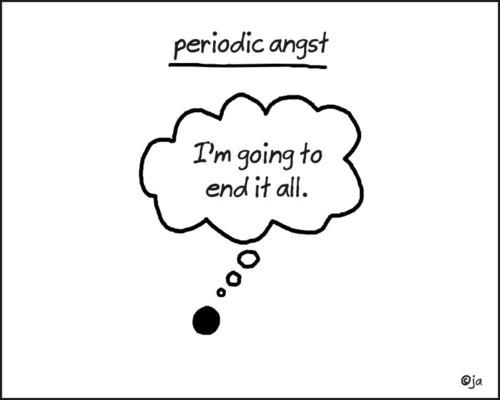
We recently started a weekly series on our Facebook and Twitter called "Uppercase of the Mondays": humorous comics and images relating to publishing, grammar, and the like to brighten up the beginning of your work week. And now, Uppercase is coming to the BloGG!
Here's a roundup of all the posts so far. Have a funny writing-related comic of your own? Send it our way!
Happy Uppercase : )


Here's a roundup of all the posts so far. Have a funny writing-related comic of your own? Send it our way!
Happy Uppercase : )




Thursday, July 19, 2012
Around the Word
Is Your E-Book a Fake? Knock-offs aren't just for fashion, and Amazon has become the Chinatown of e-book fakes. The online retailer's not just selling them—most of the offenders are products of Amazon's self-publishing imprint CreateSpace. If you're looking for Walter Issacson's bestselling bio of Steve jobs, make sure you don't get fooled by Steve Jobs by Issac Worthington. Beware of Fast and Slow Thinking by Karl Daniels, which strikes uncomfortably close to the real-deal Thinking Fast and Slow by Nobel laureate Daniel Kahneman. When searching for Girl with the Dragon Tattoo, one top result is I Am the Girl with the Dragon Tattoo. The solitary review for that book notes: "this is almost certainly copyright infringement. the author chose a
popular book title, added 'i am' to the beginning, and calls it
legitimate. of course, anyone who is looking for these things should
know better." Technically speaking, titles of books aren't copyrighted, but the legal line here is definitely blurry.
Stephen Covey's Legacy of Leadership Lit. Last week, author and father of the thought-leadership genre Stephen Covey passed away from injuries he suffered in a bike accident in April. Covey's seminal works—including 7 Habits of Highly Effective People, The 8th Habit: From Effectiveness to Greatness, and First Things First—have sold millions of copies and influenced some of the biggest names in corporate America. It's arguable that 7 Habits was responsible for catapulting thought-leadership books from a niche market to a mainstream genre, as well as making a "book as badge" the new must-have for high-powered business gurus. So the next time you land a high-paying job editing (or ghostwriting) a "big idea" piece for the latest whiz-kid CEO, thank Covey for paving the way.
Big Brother Is Reading You. Or, rather, he's reading your Kindle, according to the Wall Street Journal. E-books, which have officially outsold "analog" books this year, are the newest frontier of consumer data mining. Until now, publishers have been mostly in the dark about what happens after a book leaves the store, but no longer. Whether you download a book but don't read it, start a book and don't finish it, or tear through an entire series in a matter of days, that information is now available to those who most want to know. Some publishers are excited about the opportunity to hone their offerings according to market forces, like finding the perfect length for an e-book or coming up with a formula for ideal content, but others fear that a data-driven marketplace will have a homogenizing effect, not to mention potential privacy pitfalls. What do you think? Can boiling the book business down to an algorithm be good for the marketplace and the marketplace of ideas? Or does having the publishing industry reading over your shoulder give you a case of the digital willies?
Scalia Rules on Crimes Against Grammar. What do liberal lawyer Bryan Garner and conservative SCOTUS Justice Antonin Scalia have in common? According to this New Yorker piece, they're both SNOOTS set on righting the wrongs legal writing exacts on the English language. The two men, who bonded during a lunch meeting at which Scalia gushed over David Foster Wallace's essay "Tense Present," have collaborated on two books about the role of grammar and persuasion in legal writing. Although they disagree about politics—and the acceptability of contractions (which, according to Scalia, are “intellectually abominable, but commercially reasonable”)—they were able to withstand an exacting collaboration that produced 216 drafts before finalizing their second book, Reading Law: The Interpretation of Legal Texts. While their partnership has begun to shine a light on the issue, Garner is well aware that it'll be an uphill battle to raise the, er, bar when it comes to legal writing. “Word for word," he said, "lawyers are the most highly paid professional writers in the world. But the literary tradition in the profession is probably the worst."
Stephen Covey's Legacy of Leadership Lit. Last week, author and father of the thought-leadership genre Stephen Covey passed away from injuries he suffered in a bike accident in April. Covey's seminal works—including 7 Habits of Highly Effective People, The 8th Habit: From Effectiveness to Greatness, and First Things First—have sold millions of copies and influenced some of the biggest names in corporate America. It's arguable that 7 Habits was responsible for catapulting thought-leadership books from a niche market to a mainstream genre, as well as making a "book as badge" the new must-have for high-powered business gurus. So the next time you land a high-paying job editing (or ghostwriting) a "big idea" piece for the latest whiz-kid CEO, thank Covey for paving the way.
Big Brother Is Reading You. Or, rather, he's reading your Kindle, according to the Wall Street Journal. E-books, which have officially outsold "analog" books this year, are the newest frontier of consumer data mining. Until now, publishers have been mostly in the dark about what happens after a book leaves the store, but no longer. Whether you download a book but don't read it, start a book and don't finish it, or tear through an entire series in a matter of days, that information is now available to those who most want to know. Some publishers are excited about the opportunity to hone their offerings according to market forces, like finding the perfect length for an e-book or coming up with a formula for ideal content, but others fear that a data-driven marketplace will have a homogenizing effect, not to mention potential privacy pitfalls. What do you think? Can boiling the book business down to an algorithm be good for the marketplace and the marketplace of ideas? Or does having the publishing industry reading over your shoulder give you a case of the digital willies?
Scalia Rules on Crimes Against Grammar. What do liberal lawyer Bryan Garner and conservative SCOTUS Justice Antonin Scalia have in common? According to this New Yorker piece, they're both SNOOTS set on righting the wrongs legal writing exacts on the English language. The two men, who bonded during a lunch meeting at which Scalia gushed over David Foster Wallace's essay "Tense Present," have collaborated on two books about the role of grammar and persuasion in legal writing. Although they disagree about politics—and the acceptability of contractions (which, according to Scalia, are “intellectually abominable, but commercially reasonable”)—they were able to withstand an exacting collaboration that produced 216 drafts before finalizing their second book, Reading Law: The Interpretation of Legal Texts. While their partnership has begun to shine a light on the issue, Garner is well aware that it'll be an uphill battle to raise the, er, bar when it comes to legal writing. “Word for word," he said, "lawyers are the most highly paid professional writers in the world. But the literary tradition in the profession is probably the worst."
Thursday, July 12, 2012
Around the Word
I Can Haz English. Ah, the youth of today. Much has been made of the debate over the effect of the Internet on language and the "dumbing down" of America. This latest example from former college English professor James C. Courter bemoans how a seeming decline in literacy is effecting students' ability to translate common English phrases they hear, but aren't reading, into writing. The result are some pretty egregious (but hilarious) unintended puns, which Courter describes as a "stream of
unconsciousness." Some "gems": a "poultry excuse," experiencing "inclimate weather," observing "toilet tree" etiquette, and a lack of understanding "Taco Bell's Cannon." Is there any hope for future, or should we just resign ourselves and rename these up-and-comers Gener8tion [sic]?
Reading Rainbow: There's an App for That. One proven way to get kids reading and avoid those embarrassing errors: start 'em young. For nearly twenty years, beloved PBS series Reading Rainbow was a great source of reading-list fodder for today's Gen X and Y-ers, and now the program, which left airways in 2006, is hoping to reach a new generation of readers with an iPad app. Like the show, the app will feature video field trips, as well as granting subscribers access to 150 books.
The Emotional Life of Freelancers. Freelancing may not be the easiest gig, but it turns out that by and large, freelancers are a pretty happy bunch. Check out this great infographic on Mashable, based on results from the 2012 Salary Survey & Job Market Report. According to the survey, freelancers report a high level of job satisfaction, expectations for salary increases in the coming year, and a disinclination to return to the permanent employment. Freelancing isn't all roses, though. Respondents reported that while work-life balance, flexibility, and salary are definite pluses, there are still issues that "keep them up at night," including meeting deadlines, staying relevant, and lack of a clear career path.
A Literary Exquisite Corpse Goes Live. For only $15, you too can be a published author. In a new experiment that take the concepts of crowdsourcing and -funding to the next level, Canadian filmmaker and writier Dan Perlmutter is inviting patrons to literally buy into his new novel. Rates range from $15 for one sentence to $1000 for determining the ending. Almost every aspect of the book is up for sale, from choosing the genre ($750) to inventing a character (a mere $30). Perlmutter plans to include all paid contributions, and when it comes to attribution, the "author" claims this is just the ultimate use of Creative Commons “'Yeah, well, my name is going to be large on the cover still," he said. "[But] authors are always stealing ideas from all over the place. This is just going to be a little more explicitly done.'” What do you think? Would you pay to play?
Reading Rainbow: There's an App for That. One proven way to get kids reading and avoid those embarrassing errors: start 'em young. For nearly twenty years, beloved PBS series Reading Rainbow was a great source of reading-list fodder for today's Gen X and Y-ers, and now the program, which left airways in 2006, is hoping to reach a new generation of readers with an iPad app. Like the show, the app will feature video field trips, as well as granting subscribers access to 150 books.
The Emotional Life of Freelancers. Freelancing may not be the easiest gig, but it turns out that by and large, freelancers are a pretty happy bunch. Check out this great infographic on Mashable, based on results from the 2012 Salary Survey & Job Market Report. According to the survey, freelancers report a high level of job satisfaction, expectations for salary increases in the coming year, and a disinclination to return to the permanent employment. Freelancing isn't all roses, though. Respondents reported that while work-life balance, flexibility, and salary are definite pluses, there are still issues that "keep them up at night," including meeting deadlines, staying relevant, and lack of a clear career path.
A Literary Exquisite Corpse Goes Live. For only $15, you too can be a published author. In a new experiment that take the concepts of crowdsourcing and -funding to the next level, Canadian filmmaker and writier Dan Perlmutter is inviting patrons to literally buy into his new novel. Rates range from $15 for one sentence to $1000 for determining the ending. Almost every aspect of the book is up for sale, from choosing the genre ($750) to inventing a character (a mere $30). Perlmutter plans to include all paid contributions, and when it comes to attribution, the "author" claims this is just the ultimate use of Creative Commons “'Yeah, well, my name is going to be large on the cover still," he said. "[But] authors are always stealing ideas from all over the place. This is just going to be a little more explicitly done.'” What do you think? Would you pay to play?
Thursday, February 9, 2012
Guest Post: Malicious Obfuscation
BY ALAN PERLMAN

Such writing (chief characteristics: specialized jargon, impersonal phraseology, extended sentences, useless repetition) can be merely tedious and opaque, but it can also become a vehicle for vagueness and evasion. Recently, legalese/bureaucratese has been exploited, by devious corporations, accountants, and lawyers, to supply a house-of-cards foundation to the financial machinations that caused the nation’s economy to implode.
In “The Analogy of Avarice” (a review of James Stewart’s new book Tangled Webs: How False StatementsAre Undermining America), Jennifer Szalai says that the financial industry, unlike Bernie Madoff, never had to lie, because it was so good at creating complex financial instruments and hiding its duplicities under a fog of words.
“Banks structured derivatives and other securities to enable their clients to take on a massive amount of risk that was nevertheless legal; accountants and law firms ensured that those risks would remain hidden from investors, who could be counted on to trust the triple-A rating or to avoid the eye-glazing chore of reading the fine print… [There were] rules about ‘disclosure,’ [but those]… disclosures in a financial report could be buried in the footnotes and, with some clever wording, made sufficiently dull to ensure that they would barely be seen as red flags."
Want an example? Here’s a short selection from page 30, note 3 of Enron’s 2000 annual report, written just one year before the firm imploded:
“Securitization. From time to time, Enron sells interests in certain of its financial assets. Some of the sales are completed in securitization, in which Enron concurrently enters into swaps associated with the underlying assets which limit the risks assumed by the purchaser. Such swaps are adjusted to fair value using quoted market prices, if available, or estimated fair value based on management's best estimate of the present value of future cash flow. The swaps are included in Price Risk Management activities above as equity investments.”
What does that even mean? Not much, according to Szalai:
“The text was undoubtedly fussed over by a platoon of lawyers in order to achieve just the right balance of disclosure and evasion [all emphasis mine]. The company might have sold some assets, or it might not have sold some assets; those sales, if any, might include securitizations, or they might not have included securitizations; the securitizations might have had a market price, or they might not have had a market price; if they didn't, then Enron's management gave them a price according to ‘management's best estimate’—which is to say, whatever management believed they were worth….
“All this would merit the word ‘monstrous,’ except the adjective implies an element of excitement and drama, whereas this is a system that thrives on obstruction and boredom. According to [its] conventions…the footnotes are more important than the main body of the text. Sentences are crafted so as not to be read. Language should confound rather than communicate.”
All too often, it does confound. And that obscurity—in an account of what companies are doing with the wealth of the people reading the account—is intentional. We don’t have the time or inclination to wade through it all, and it’s doubtful that clarity would emerge even if we did.
________________________
I advertise myself (accurately) as a “linguistics expert,” so people often ask me questions about language usage. One recent correspondent was wondering whether—given all the usage “errors” people commit these days—the English language isn’t losing its nuance, becoming reduced to the lowest common denominator…generally being “dumbed down.” Maybe, the reasoning goes, if we lose too many important distinctions, we won’t be able to communicate at all.
To those people I say: chill out. (Unless you’re someone who likes to play gotcha games with other people’s speech “errors,” in which case I say: shut up.) Language is a complex system that won’t be severely impaired by a little variation and change. A much more urgent concern, because of its dire economic complications, is the spread of deliberately complex, opaque language.
Yes, paradoxically, although English prose has become simpler over the years (even sentence fragments regularly appear in print), the complexity of grammatically and mechanically perfect legal and financial jargon can create a dialect that’s unintelligible to most native speakers, even educated, literate ones.
Such writing (chief characteristics: specialized jargon, impersonal phraseology, extended sentences, useless repetition) can be merely tedious and opaque, but it can also become a vehicle for vagueness and evasion. Recently, legalese/bureaucratese has been exploited, by devious corporations, accountants, and lawyers, to supply a house-of-cards foundation to the financial machinations that caused the nation’s economy to implode.
In “The Analogy of Avarice” (a review of James Stewart’s new book Tangled Webs: How False StatementsAre Undermining America), Jennifer Szalai says that the financial industry, unlike Bernie Madoff, never had to lie, because it was so good at creating complex financial instruments and hiding its duplicities under a fog of words.
“Banks structured derivatives and other securities to enable their clients to take on a massive amount of risk that was nevertheless legal; accountants and law firms ensured that those risks would remain hidden from investors, who could be counted on to trust the triple-A rating or to avoid the eye-glazing chore of reading the fine print… [There were] rules about ‘disclosure,’ [but those]… disclosures in a financial report could be buried in the footnotes and, with some clever wording, made sufficiently dull to ensure that they would barely be seen as red flags."
Want an example? Here’s a short selection from page 30, note 3 of Enron’s 2000 annual report, written just one year before the firm imploded:
“Securitization. From time to time, Enron sells interests in certain of its financial assets. Some of the sales are completed in securitization, in which Enron concurrently enters into swaps associated with the underlying assets which limit the risks assumed by the purchaser. Such swaps are adjusted to fair value using quoted market prices, if available, or estimated fair value based on management's best estimate of the present value of future cash flow. The swaps are included in Price Risk Management activities above as equity investments.”
What does that even mean? Not much, according to Szalai:
“The text was undoubtedly fussed over by a platoon of lawyers in order to achieve just the right balance of disclosure and evasion [all emphasis mine]. The company might have sold some assets, or it might not have sold some assets; those sales, if any, might include securitizations, or they might not have included securitizations; the securitizations might have had a market price, or they might not have had a market price; if they didn't, then Enron's management gave them a price according to ‘management's best estimate’—which is to say, whatever management believed they were worth….
“All this would merit the word ‘monstrous,’ except the adjective implies an element of excitement and drama, whereas this is a system that thrives on obstruction and boredom. According to [its] conventions…the footnotes are more important than the main body of the text. Sentences are crafted so as not to be read. Language should confound rather than communicate.”
All too often, it does confound. And that obscurity—in an account of what companies are doing with the wealth of the people reading the account—is intentional. We don’t have the time or inclination to wade through it all, and it’s doubtful that clarity would emerge even if we did.
The principles of clear communication haven’t changed: shorter sentences, simpler words, less jargon, concrete examples, and clear explanation of technical terms. Disregarding them in order to confuse and deceive is unconscionable. Deliberate obscurity does irreparable damage to the thin bonds of trust that are supposedly encoded in words on a page. It buries—in a steaming pile of verbosity and BS—the premise that the writer is actually trying to tell the reader something.
________________________
Alan Perlman is an executive speechwriter and ghostwriter/editor. He has an AB from Brown University, an MA, and a PhD from the University of Chicago in linguistics. (His doctoral thesis examined variation in Hawaiian pidgin and creole.) He wrote executive speeches and other communications, mainly at GM and Kraft Foods, for twenty years, and he is the author of two books on speechwriting. As an expert witness and consultant, he advises attorneys on matters of language, including plagiarism, anonymous documents, trademark/copyright infringement, and document interpretation. Write to him at alanperlmanphd@gmail.com.
Friday, December 2, 2011
Around the Word
In defense of adverbs: Though Stephen King said, "The road to hell is paved in adverbs," one writer is coming to the much-maligned part of speech's defense. Atlantic writer Lily Rothaman argues that many famously, fantastically memorable phrases would be duds without adverbs -- would we "give a damn" about Rhett and Scarlett without "frankly"? Where do you weigh in on the adverb debate?
NYPL woes: The New York Public Library has been a vital resource for scholars, writers, and readers in NYC for over 100 years. But with budgets tightening and a large renovation planned, the library is in an unprecedented state of upheaval. Check out the Nation's in-depth article on the changes at America's largest library.
So-so sentences: Is "so" the new "um"? That's the question the Chronicle of Higher Education's Lingua Franca blog is asking, after the New York Times pointed out a pattern of starting sentences with "so" earlier this year. Microsoft employees take credit for starting the "so" phenomenon, but its been picked up by everyone from politicians to NPR (a chronic offender). What do you think about this connector-turned-sentence starter? Is "so" so over?
For the policy wonk who has everything: The gift-giving season is upon us, and you might be debating which books to put on your shopping list. The Guardian has compiled several different lists of the best books to give in 2011, but our favorite is the list of political books. From manifestos to biographies to political thrillers, you're sure to find something on this list for the current events connoisseur in your life.
NYPL woes: The New York Public Library has been a vital resource for scholars, writers, and readers in NYC for over 100 years. But with budgets tightening and a large renovation planned, the library is in an unprecedented state of upheaval. Check out the Nation's in-depth article on the changes at America's largest library.
So-so sentences: Is "so" the new "um"? That's the question the Chronicle of Higher Education's Lingua Franca blog is asking, after the New York Times pointed out a pattern of starting sentences with "so" earlier this year. Microsoft employees take credit for starting the "so" phenomenon, but its been picked up by everyone from politicians to NPR (a chronic offender). What do you think about this connector-turned-sentence starter? Is "so" so over?
For the policy wonk who has everything: The gift-giving season is upon us, and you might be debating which books to put on your shopping list. The Guardian has compiled several different lists of the best books to give in 2011, but our favorite is the list of political books. From manifestos to biographies to political thrillers, you're sure to find something on this list for the current events connoisseur in your life.
Subscribe to:
Posts (Atom)
© 2008 Gotham Ghostwriters, All rights reserved.

 Posts
Posts


